Most travelers visit the Ngorongoro Crater for the Big Five.
They descend into the vast caldera, photograph lions resting in the grass, search for black rhinos, watch elephants move through the forest, and return to the rim with a camera full of memories.
But there is another side of the Ngorongoro Crater.
One that reveals itself when you slow down, know where to look, and travel with someone who understands that the best safari experiences are not always found on the busiest roads.
Beyond the famous wildlife lies a world of ancient forests, volcanic landscapes, hidden lakes, extraordinary cultural encounters and moments of silence that most visitors simply drive past.
Here are 13 of the hidden wonders that can transform a visit to the Ngorongoro Crater from a standard safari into something far more memorable.
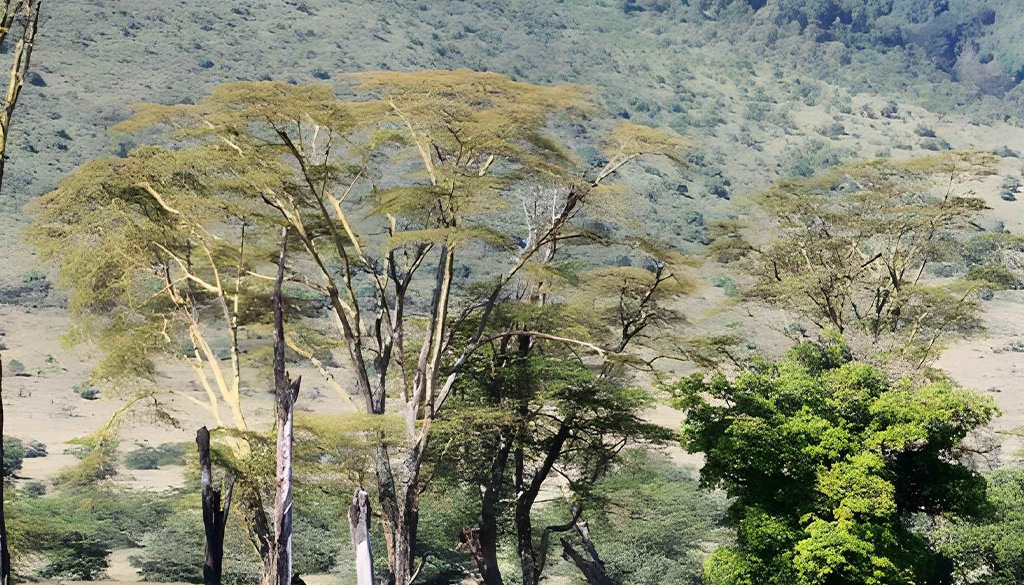
1. The Ghostly Lerai Forest
Lerai Forest is easy to miss.
Its distinctive yellow-barked fever trees create an almost surreal landscape, particularly in the soft light of early morning. Mist and golden sunlight can make the trees appear to float above the ground.
The forest is also an important wildlife habitat and can offer opportunities to encounter elephants and other species away from the open crater floor.
For photographers, the atmosphere alone can make an early morning visit worthwhile.
2. Olmoti Crater
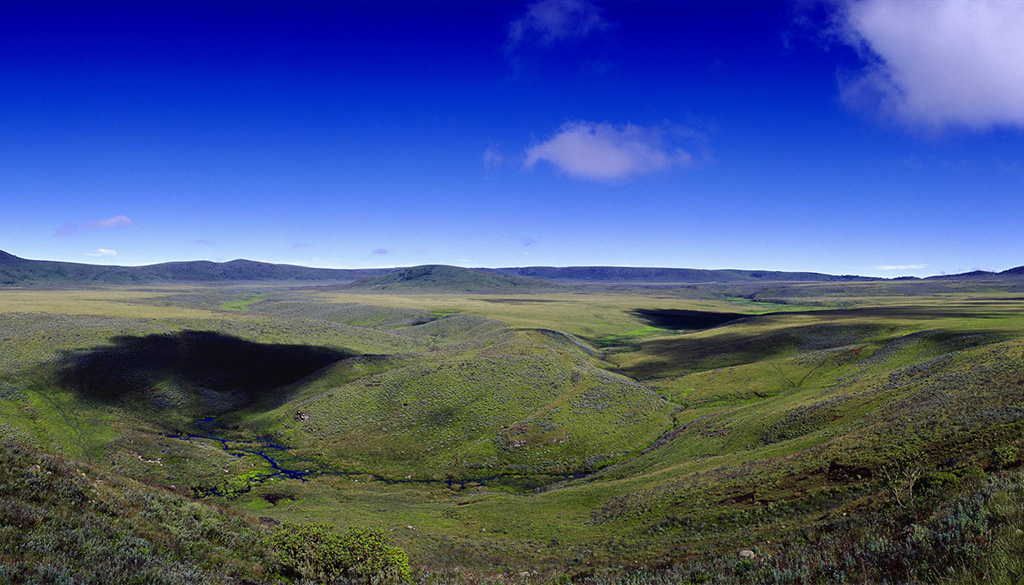
Few travelers realize that the Ngorongoro Conservation Area contains more than one spectacular volcanic crater.
Olmoti Crater lies in the highlands north of the main Ngorongoro Crater and offers a completely different experience.
Rather than simply viewing the landscape from a vehicle, travelers can explore the area on foot with a guide and discover lush vegetation, dramatic volcanic scenery and the beautiful Munge Waterfall.
It is the kind of experience that appeals to travelers who want to step beyond the traditional game drive.
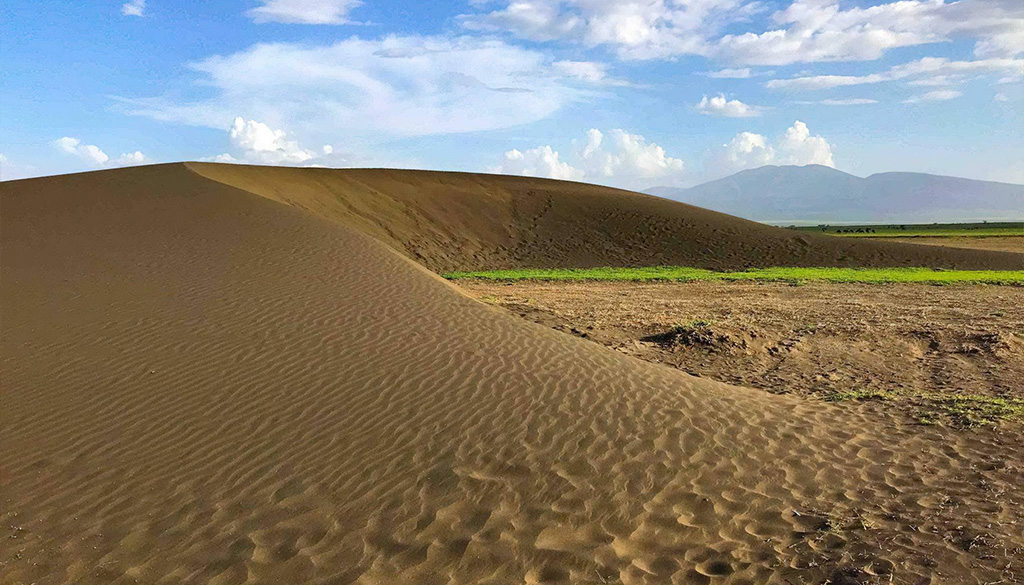
3. The Moving Sands of the Ngorongoro Highlands
The volcanic landscapes surrounding Ngorongoro hold some remarkable geological secrets.
Among them are the famous shifting sands, dark volcanic formations that can slowly move across the landscape under the influence of wind.
They look almost impossible at first glance.
A mountain of sand that appears stationary can, over time, travel surprisingly long distances across the plains.
It is a reminder that the Ngorongoro landscape is not simply beautiful. It is constantly changing.
4. The Extraordinary Patterns of Lake Magadi
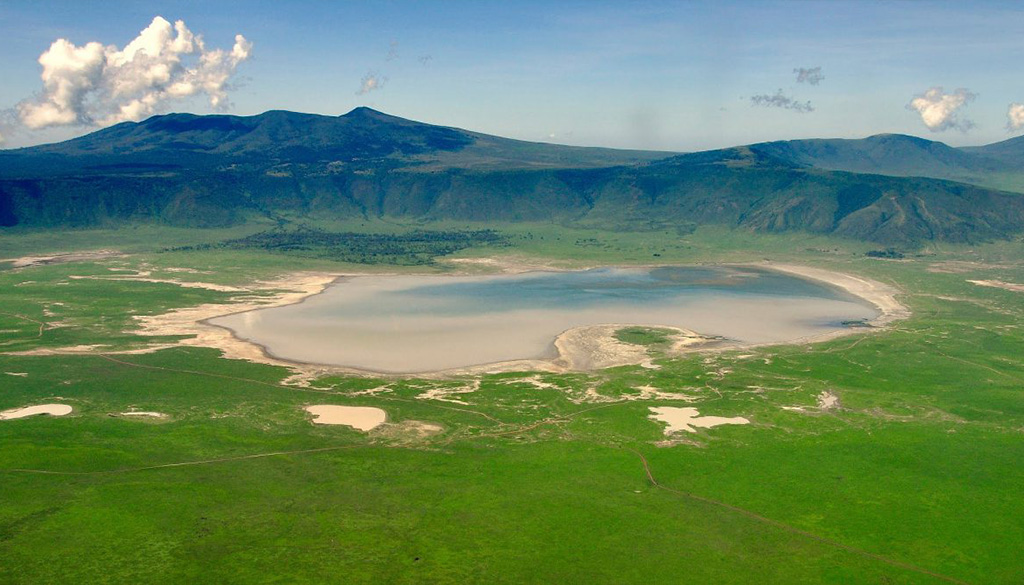
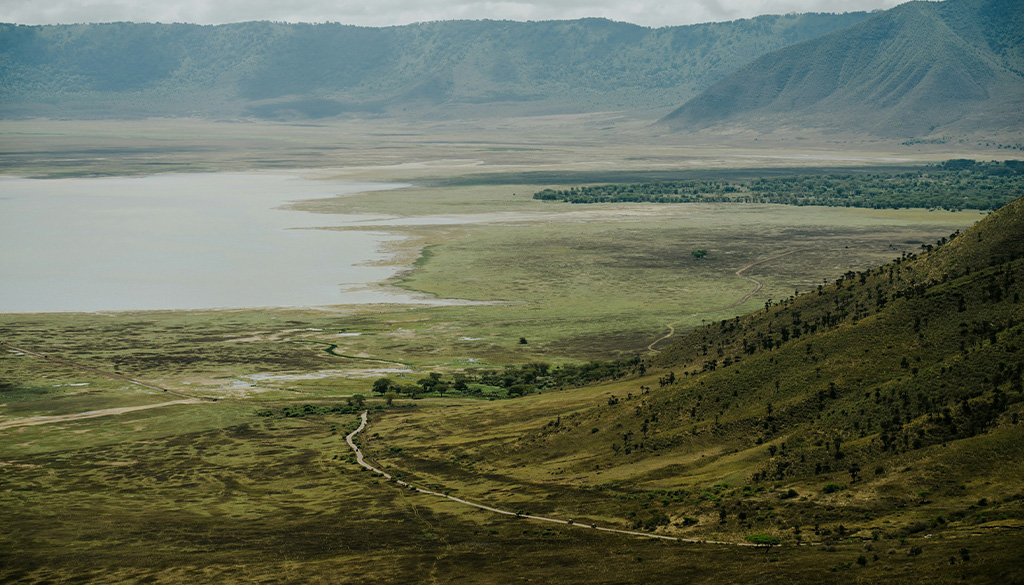
Lake Magadi is one of the most recognizable features on the floor of the Ngorongoro Crater.
From the right viewpoint, its shallow waters and mineral-rich edges create beautiful patterns across the landscape, contrasting dramatically with the surrounding grasslands.
The lake also attracts large numbers of birds, making it an important stop for wildlife enthusiasts and photographers.
But perhaps the most impressive part is seeing the lake from above before descending into the crater.
The scale becomes clear only then.
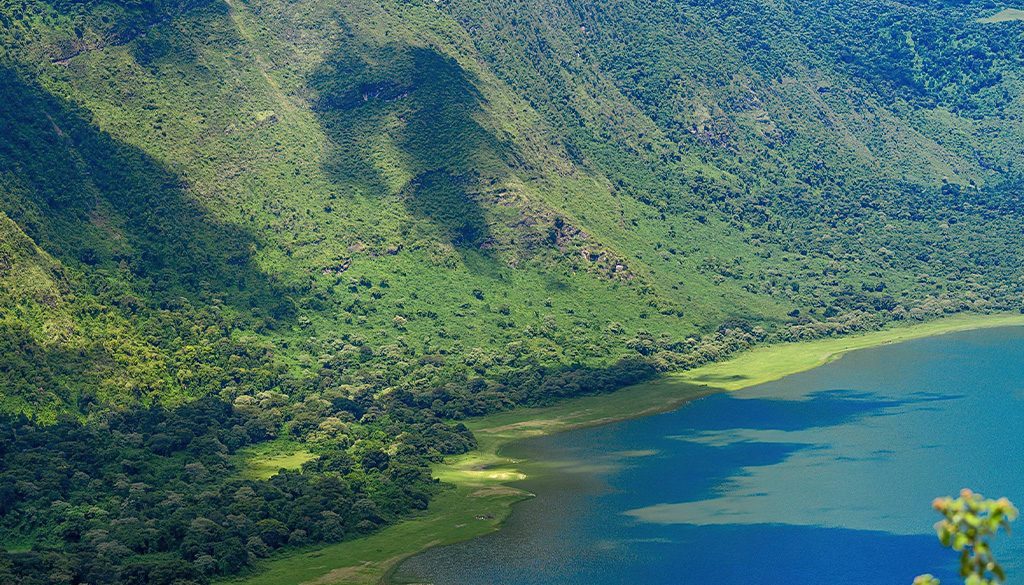
5. Empakaai Crater and Its Emerald Lake
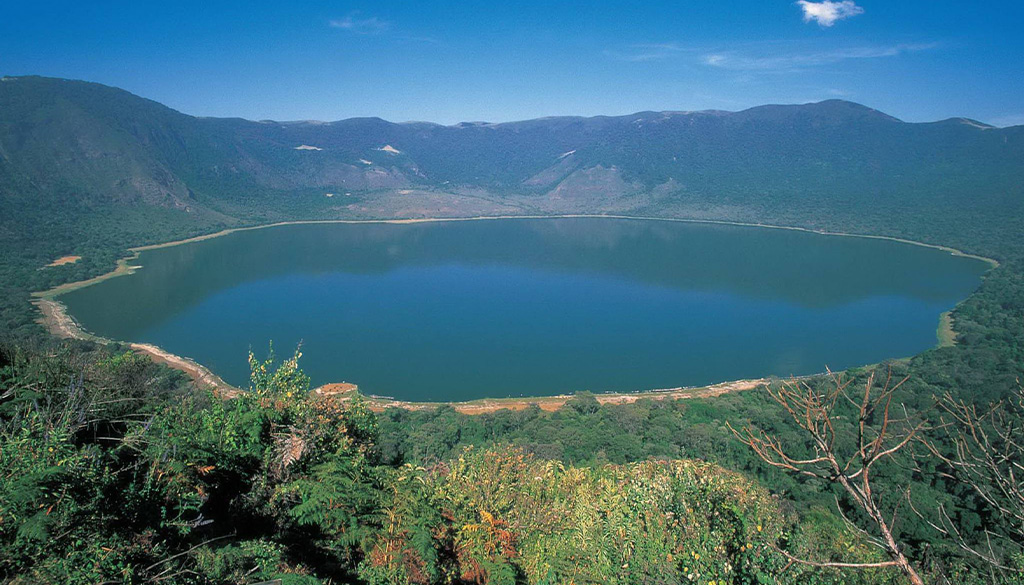
If Ngorongoro Crater feels enormous, Empakaai offers an entirely different perspective.
Deep within the volcanic highlands is a dramatic crater surrounded by steep, forested walls. At its center sits a beautiful soda lake that can attract flamingos and other birdlife.
Hiking into Empakaai offers something a conventional game drive cannot provide: time on foot, fresh mountain air and uninterrupted views across one of Tanzania’s most extraordinary volcanic landscapes.
For adventurous luxury travelers, this is where the journey becomes personal.
6. The Great Elephants of the Crater
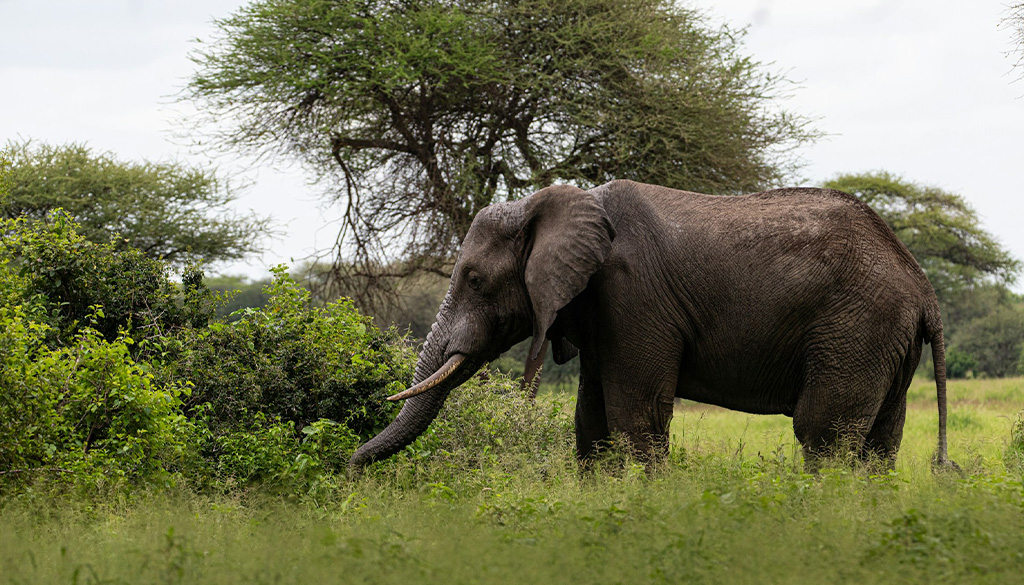
The Ngorongoro Crater is famous for its wildlife, but there is something particularly moving about encountering its older elephants.
Some of the largest bulls can be found moving through areas where water and vegetation are abundant.
Their sheer size, age and calm presence make them unforgettable.
This is not simply about seeing an elephant.
It is about standing quietly beside one of Africa’s great survivors and appreciating the decades of life written into its enormous frame.
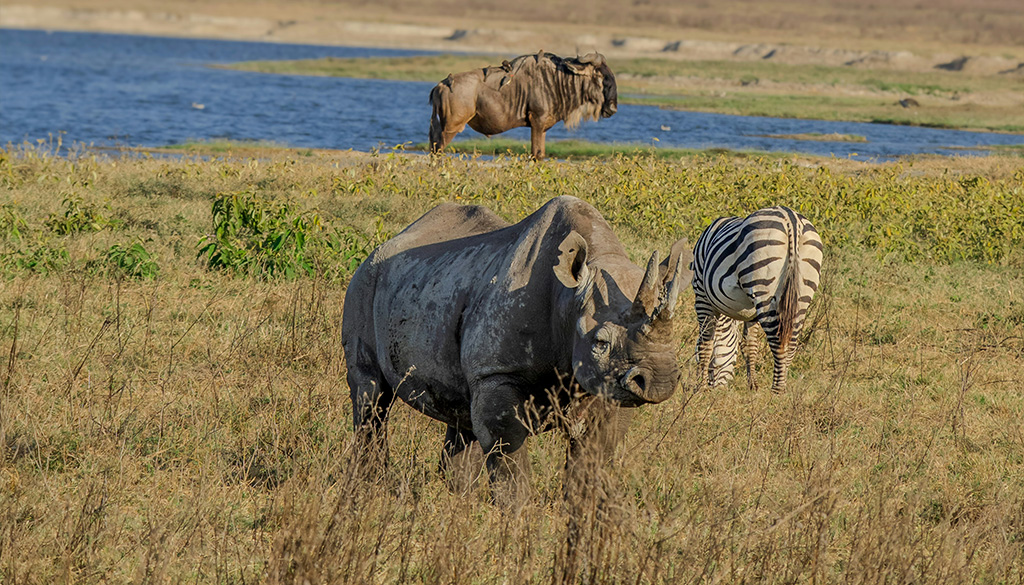
7. Searching for Ngorongoro’s Black Rhinos
For many travelers, seeing a black rhino is one of the defining moments of an East African safari.
The Ngorongoro Crater remains one of the places where visitors have a chance of encountering these critically endangered animals.
But seeing one is never about rushing from one viewpoint to another.
The experience is in the anticipation: scanning the grasslands, watching the guide read tracks and movement, then suddenly spotting the unmistakable silhouette in the distance.
The best wildlife encounters often happen when you have the patience to wait.
8. Golden Jackals at First Light
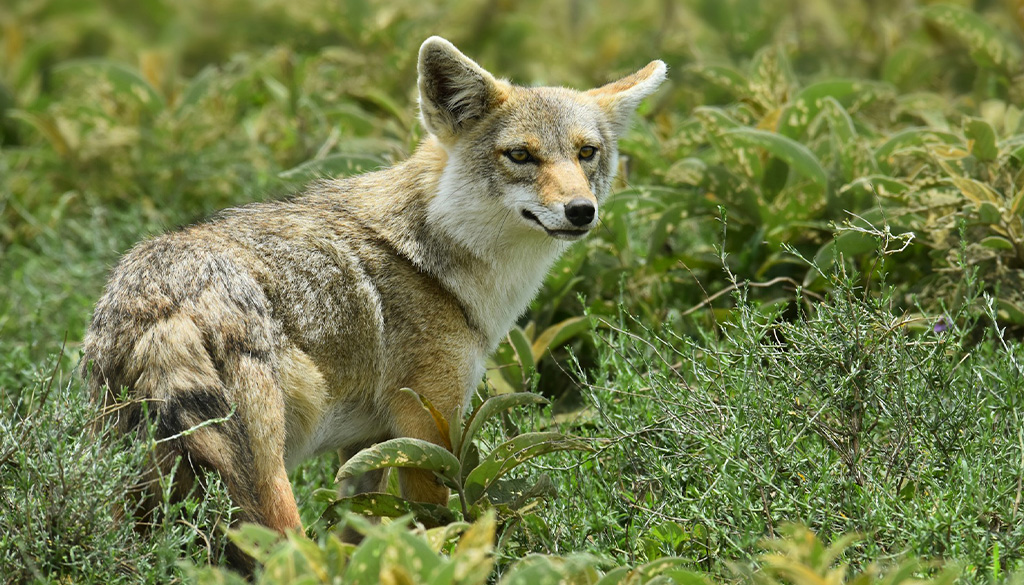
Not every memorable wildlife encounter involves a lion or rhino.
Golden jackals can offer some of the most charming moments of a safari, particularly in the early morning when the landscape is beginning to wake.
Watching them move through the grasslands as the first light reaches the crater floor offers photographers a chance to capture wildlife in a completely different mood.
Quiet. Intimate. Unhurried.
9. The Hippo Pools After the Crowds Leave
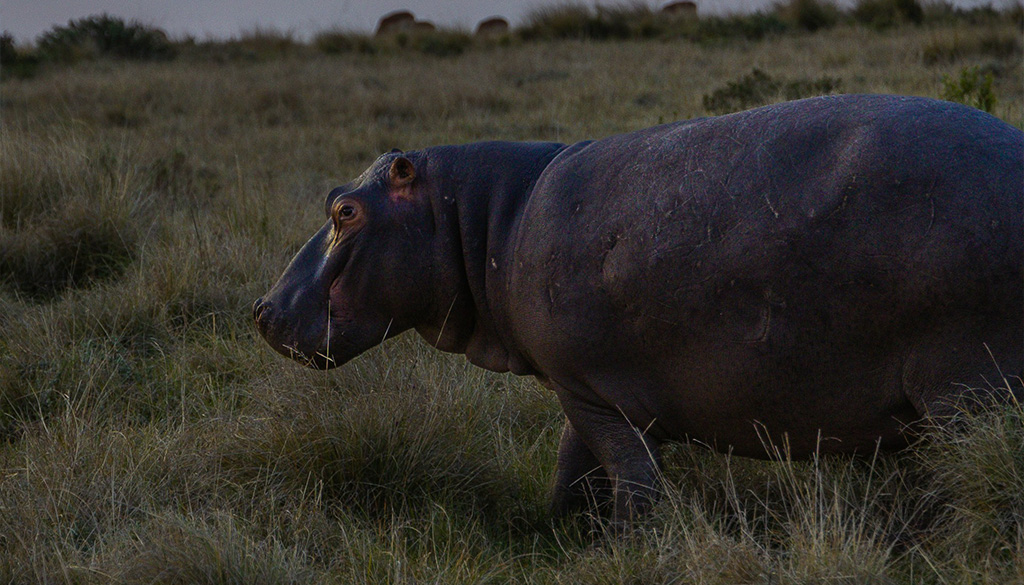
The hippo pools are among the most popular places to visit within the Ngorongoro Crater.
During the day, they can be busy with safari vehicles.
But the surrounding landscape tells a different story.
Hippos spend much of their time in water during the heat of the day before becoming more active later. Watching these enormous animals move through their environment is a fascinating reminder that the crater is a living ecosystem, not simply a wildlife viewing destination.
This is why timing matters.
10. Nasera Rock and the Ancient Human Story
Ngorongoro is not only about wildlife.
It is also one of East Africa’s great archaeological landscapes.
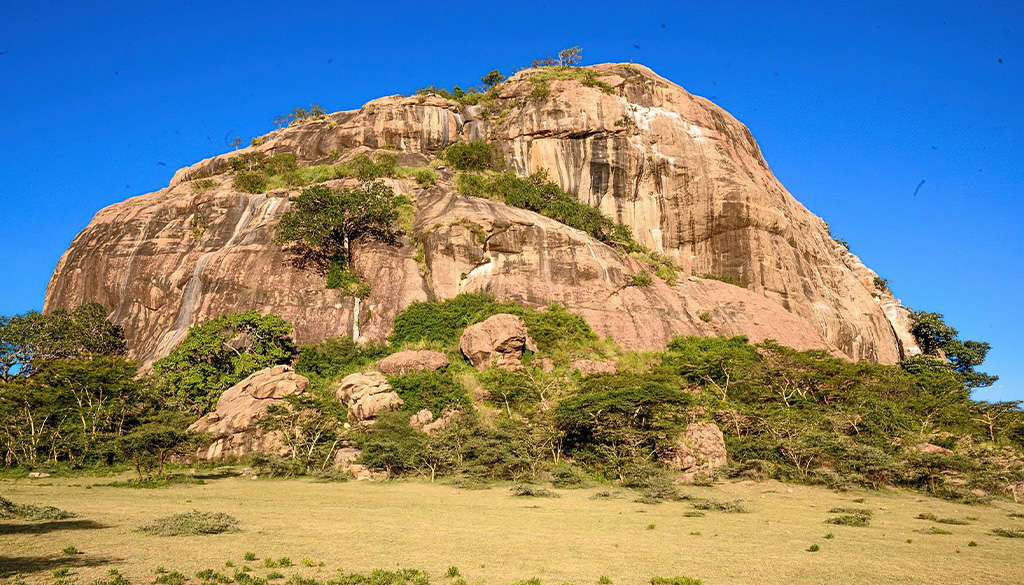
Nasera Rock rises dramatically from the surrounding plains and has provided shelter to humans for thousands of years.
Across the wider Ngorongoro Conservation Area, archaeological discoveries have helped scientists understand some of the earliest chapters of human history.
Standing among these landscapes creates an unusual feeling.
You are not simply looking at Africa’s wildlife.
You are standing inside a story that began long before modern safari existed.
11. Life Among the Maasai
One of the most distinctive aspects of the Ngorongoro Conservation Area is the coexistence of wildlife and Maasai communities.
Traditional pastoralist communities continue to live within the wider conservation landscape, maintaining livestock and cultural traditions that have endured for generations.
A respectful cultural encounter can add an entirely different dimension to a safari.
Instead of simply photographing the landscape, you begin to understand the people who have lived alongside it.
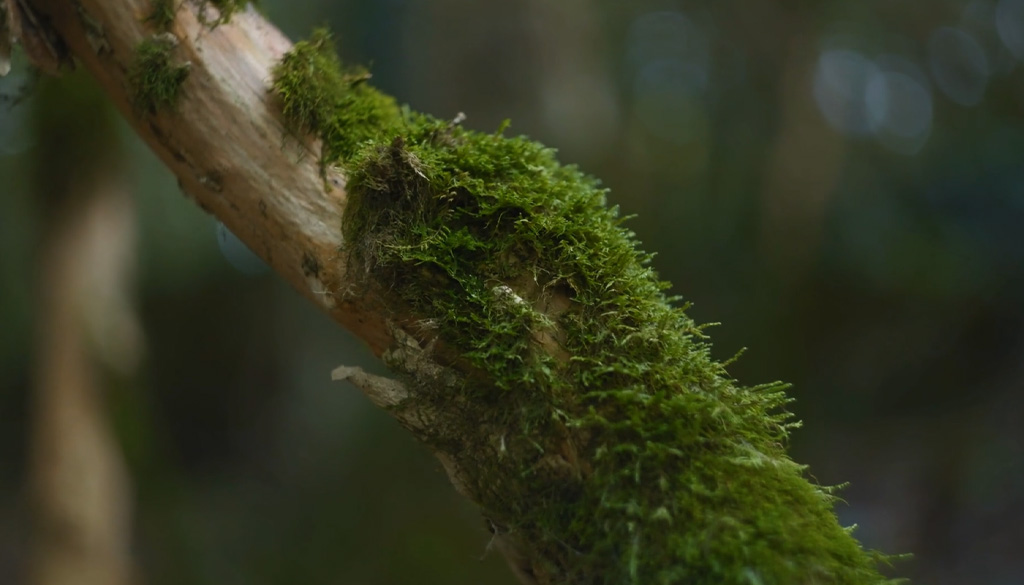
12: The Cloud Forest Moss
High above the Ngorongoro Crater, ancient trees are draped in “Old Man’s Beard” moss, thriving in the cool, misty highland air.
This pristine environment is known for exceptionally clean, fresh mountain air, making a walk through the cloud forest feel like stepping into another world.
A hidden side of Ngorongoro that many travelers never experience.
13. The Silence Before the Crater Wakes
Perhaps the greatest luxury in Ngorongoro is not something you can photograph.
It is silence.
Arriving early, before the crater becomes busy, creates a completely different atmosphere.
The light begins to spread across the caldera. Birds call from the surrounding grasslands. Distant wildlife begins to move.
For a moment, everything feels still.
And then the crater wakes.
That first hour can become one of the most memorable moments of your entire safari.
Experience Ngorongoro Differently
The Ngorongoro Crater is one of Africa’s most remarkable wildlife destinations, but seeing the famous animals is only part of the story.
The real magic lies in understanding the landscape around them.
It is in the forests, volcanic craters, ancient archaeological sites, cultural encounters and quiet moments between wildlife sightings.
For travelers accustomed to beautifully planned journeys, private experiences and meaningful encounters, Ngorongoro rewards a different approach.
Don’t simply ask, “What will we see?”
Ask, “What will most travelers miss?”
That is where the adventure begins.
If you are planning a luxury Tanzania safari for 2026 or 2027, we can help design a private Ngorongoro experience around your interests, pace and preferred level of comfort.
Because the best safari is not necessarily the one where you see the most.
It is the one you remember long after you return home.
Help Me Plan My Trip!
Get a Quote
We would love to hear about your upcoming trip! Contact us to book a 1:1 consultation with one of our expert safari designers so we can discuss your trip in great detail together and get a quote. Initial consultations will be free of charge.