
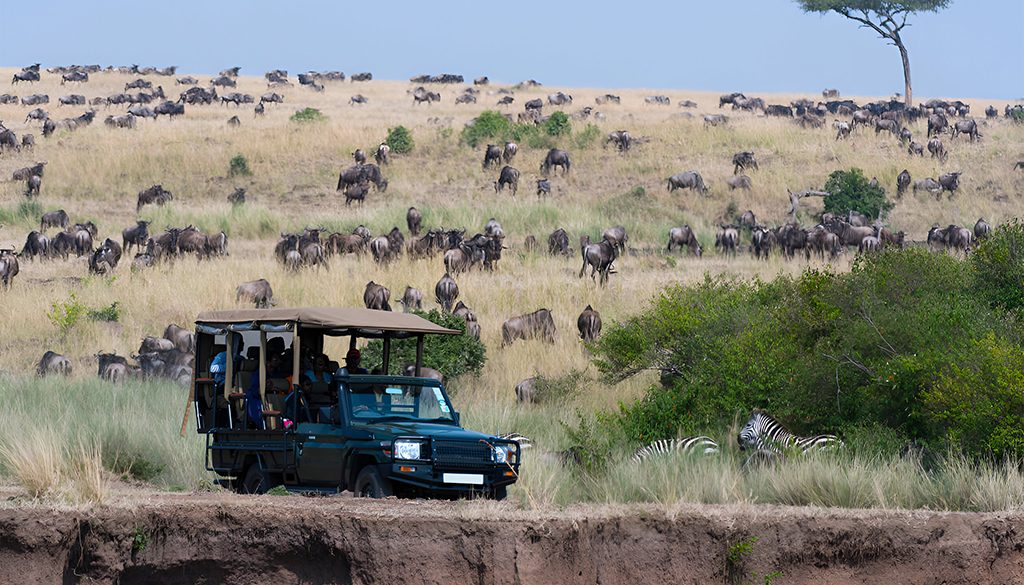
The question of Masai Mara vs Serengeti continues to shape safari planning in 2026. Although these two iconic ecosystems share a seamless border and form part of the same Great Migration cycle, the experience of each feels distinct in scale, pace, and atmosphere. Choosing between them is less about determining which destination is better and more about understanding how you would like to encounter the wild.
Both deliver extraordinary wildlife sightings, exceptional guiding, and a range of camps that suit different travel styles. The difference lies in how the landscape unfolds around you and how much time you have to explore it.
Scale and Wildlife Density
One of the most noticeable distinctions when comparing Masai Mara vs Serengeti is the sense of space. The Serengeti in Tanzania is immense — nearly ten times larger than the Masai Mara — with open plains stretching uninterrupted toward the horizon. Its vastness creates a profound feeling of immersion. Drives can continue for hours across expansive terrain, and wildlife sightings often feel unhurried and private simply because of the reserve’s scale. For travelers who value solitude, extended exploration, and the visual drama of endless grasslands, the Serengeti offers remarkable depth.
The Masai Mara in Kenya, by contrast, is more compact and concentrated. Its smaller geography supports a high density of wildlife, particularly predators. Lion prides, cheetahs, and leopards are frequently encountered, and the Big Five can often be seen within a relatively short stay. For travelers working within a three- or four-day itinerary, the Mara provides a highly rewarding safari without feeling rushed. The experience tends to feel active and dynamic, with sightings unfolding in close succession.
The Great Migration 2026: When and Where to Go
For many travelers, the defining factor in the Masai Mara vs Serengeti discussion is the Great Migration. However, where you should position yourself depends almost entirely on the month of travel rather than a fixed preference for Kenya or Tanzania.
From January to March, the southern Serengeti and Ndutu plains host the calving season. During this period, hundreds of thousands of wildebeest give birth within a concentrated window, attracting intense predator activity and offering one of the most compelling wildlife spectacles of the year. Between April and June, the herds move through the Serengeti’s Western Corridor, where crossings of the Grumeti River add dramatic tension to the journey.
From July to September, the migration typically reaches the northern Serengeti before crossing into the Masai Mara. The Mara River crossings during these months are among the most iconic scenes associated with African safaris. By October through December, the herds gradually begin their journey south again toward the central Serengeti, following the short rains and fresh grazing.
For travelers planning specifically around the Great Migration 2026, timing matters more than borders. Both destinations play an essential role in the annual cycle.
Safari Style and Atmosphere
Beyond wildlife density and seasonal movement, the overall safari style differs subtly between the two regions. In the Masai Mara, particularly within private conservancies such as Mara North and Naboisho, guests often benefit from lower vehicle density, off-road tracking, and night drives that are not permitted within the main national reserve. These conservancies combine strong conservation partnerships with personalized guiding and a range of accommodation styles, from classic tented camps to contemporary lodges. Accessibility from Nairobi also makes the Mara appealing for shorter itineraries or combinations with Kenya’s coastline.
The Serengeti offers a different kind of immersion. Its scale naturally fosters stillness, particularly in remote sectors away from busier airstrips. Many camps operate seasonally, relocating throughout the year to remain close to the migration. This approach allows guests to stay connected to wildlife movement while maintaining a relatively light environmental footprint. The extended distances within the park often encourage longer game drives and a slower rhythm, appealing to travelers who prefer depth over intensity.
Logistics and Accessibility
Practical considerations also influence the Masai Mara vs Serengeti decision. Flights from Nairobi’s Wilson Airport to the Masai Mara take approximately 45 minutes, enabling guests to arrive at their lodge in time for lunch and an afternoon game drive. This efficiency makes the Mara particularly suitable for shorter safaris or itineraries that include destinations such as Diani Beach.
Reaching the Serengeti typically involves international arrival into Tanzania followed by a light aircraft connection from Arusha or Kilimanjaro to regional airstrips. While the journey may take longer, it often aligns well with extended stays where travel time is part of a broader, immersive itinerary rather than a limitation.
Masai Mara vs Serengeti: Making the Right Choice
Ultimately, the Masai Mara vs Serengeti decision is about alignment rather than comparison. The Masai Mara suits travelers who prioritize concentrated wildlife encounters, accessibility, and the possibility of multiple predator sightings within a shorter timeframe. The Serengeti rewards those who prefer expansive horizons, longer drives, and the opportunity to follow the migration across a vast and varied landscape.
Both ecosystems form part of the same natural story. The difference lies in how you choose to experience it — whether through the concentrated intensity of the Mara or the expansive immersion of the Serengeti. With thoughtful timing and planning, either destination can deliver an exceptional safari in 2026.
Help Me Plan My Trip!
Get a Quote
We would love to hear about your upcoming trip! Contact us to book a 1:1 consultation with one of our expert safari designers so we can discuss your trip in great detail together and get a quote. Initial consultations will be free of charge.

