
For many travelers, a Kenyan safari begins with the Big Five. However, in the country’s north, a different kind of wildlife experience awaits. Samburu rare species tours focus on animals that are found almost exclusively in this semi-arid region, offering a safari that feels distinct from the more familiar landscapes of the Maasai Mara.
Located in Kenya’s northern frontier, Samburu National Reserve is known for its dramatic riverine forests, open scrubland, and the life-giving Ewaso Nyiro River. These conditions create a habitat suited to species that have adapted specifically to arid environments. For wildlife enthusiasts, photographers, and returning safari guests, Samburu offers something refreshingly different.

The Samburu Special Five
Samburu rare species tours are often centered around what is known as the “Samburu Special Five.” These animals are rarely seen in southern Kenya and are uniquely adapted to northern conditions.
Larger than the common plains zebra, Grevy’s zebra has narrower stripes and a white belly. It is classified as endangered, and northern Kenya remains one of its last strongholds.
Reticulated Giraffe
Easily identified by its striking geometric coat pattern, the reticulated giraffe is predominantly found in northern Kenya.
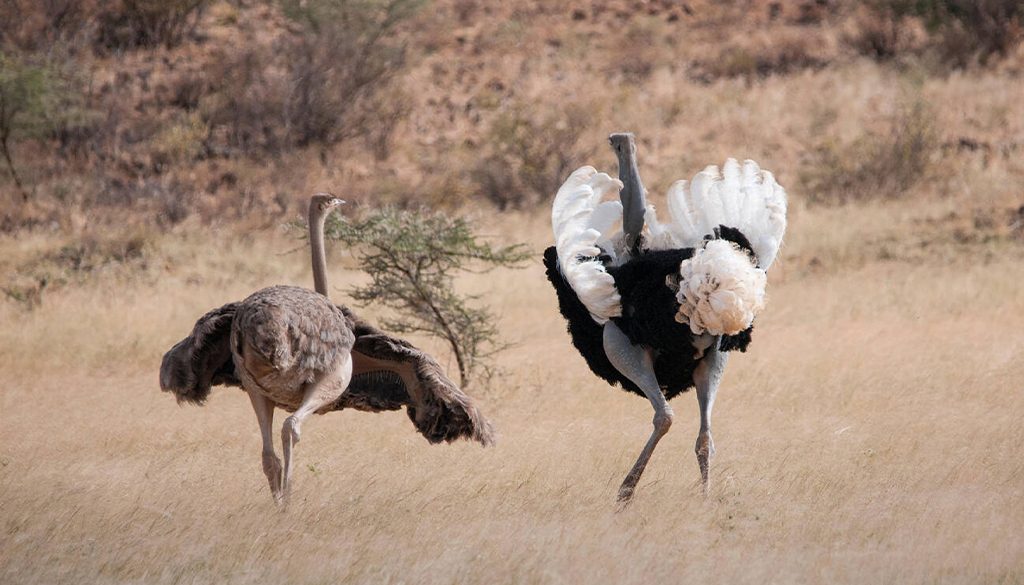
Somali Ostrich
Unlike the more widespread Maasai ostrich, the Somali ostrich male has a distinct blue neck and thighs, making it visually unmistakable.
Beisa Oryx
With long, straight horns and a pale coat suited to desert camouflage, the Beisa oryx thrives in dry habitats.

Gerenuk
Perhaps the most unusual of the group, the gerenuk is known for standing upright on its hind legs to browse shrubs and trees.
These species define the uniqueness of Samburu. For guests who have already experienced other safari regions, seeing the Special Five adds depth and variety to a Kenyan itinerary.
Why Samburu Offers Exceptional Rare Species Viewing
The geography of Samburu plays a significant role in wildlife visibility. The semi-arid climate means vegetation is less dense than in highland reserves, improving sightlines for game drives. Animals frequently gather along the Ewaso Nyiro River, particularly during dry months, creating reliable viewing opportunities.
Additionally, Samburu receives fewer visitors than more famous reserves. This lower traffic often translates into quieter sightings and a more exclusive safari atmosphere.
For photographers, the region’s light is another advantage. The open terrain and clear northern skies provide excellent conditions for capturing wildlife in natural tones without heavy vegetation obstructing views.

Conservation and Community Impact
Samburu rare species tours are closely tied to conservation initiatives. Northern Kenya has become a focal point for protecting endangered species such as Grevy’s zebra. Collaborative efforts between conservancies, local communities, and conservation organizations have helped stabilize certain populations.
Many safari lodges in the region operate within or alongside community conservancies, ensuring tourism directly supports local livelihoods. Guests often have the opportunity to learn about Samburu culture and conservation work as part of their stay.
This integration of wildlife protection and community partnership adds meaningful context to the safari experience.
Best Time for Samburu Rare Species Tours
Samburu is a year-round destination, but wildlife viewing is typically strongest during the dry seasons:
January to March
June to October
During these months, animals concentrate around water sources, increasing the likelihood of sightings. However, even in greener periods, the reserve’s open landscape supports consistent viewing.
Where to Stay in Samburu
Several high-end properties provide access to rare species tours while maintaining comfort and exclusivity.
Sasaab offers panoramic views of the Ewaso Nyiro River and combines Moroccan-inspired design with excellent guiding. Its location allows quick access to prime wildlife areas.
Saruni Samburu operates within Kalama Conservancy, offering elevated viewpoints and a quieter, conservation-focused experience.
Elephant Bedroom Camp provides a classic tented safari atmosphere along the river, where elephants frequently pass through camp.
Each lodge offers experienced guides familiar with tracking the region’s rare species, which significantly enhances the quality of sightings.

Who Should Consider a Samburu Rare Species Safari?
Samburu is particularly well suited for:
Repeat safari travelers seeking something different
Wildlife photographers
Conservation-minded guests
Travelers combining northern Kenya with the Maasai Mara
Families wanting a quieter safari environment
When paired with another region, Samburu adds contrast and broadens the wildlife experience beyond the traditional Big Five focus.
Final Thoughts
Samburu rare species tours provide a distinct perspective on Kenyan wildlife. Rather than revisiting familiar safari imagery, guests encounter animals adapted to arid landscapes and shaped by a different ecological rhythm.
For travelers looking to deepen their understanding of Kenya’s biodiversity, Samburu offers both exclusivity and authenticity. Its combination of unique species, conservation significance, and quieter safari atmosphere makes it one of the country’s most compelling northern destinations.
Help Me Plan My Trip!
Get a Quote
We would love to hear about your upcoming trip! Contact us to book a 1:1 consultation with one of our expert safari designers so we can discuss your trip in great detail together and get a quote. Initial consultations will be free of charge.


